
TL;DR
- Where is it? – Northeastern Spain, 2 hours south of San Sebastian or Bilbao
- What grapes should I expect? – Tempranillo, Tempranillo and more Tempranillo. Also, Grenache, a little bit. For whites, Viura, Grenache Blanc and Malvasia
- How to get there – Fly to Bilbao via Madrid, train or drive around
- When to go – April-May or October-November
- Cost of tastings – most tastings were free, and if they weren’t, buying a bottle waived the tasting fee
- Wineries I went to + the rating I give it (read more about each one here)
- Akutain – 8.5/10
- Bodega Javier San Pedro Ortega 7.5/10
- Eguren Ugarte 8/10
- Lopez de Heredia 7.5/10
- Bodegas Muga 7/10
- Other wineries of note
- Remelluri
- Marques de Riscal
- La Rioja Alta
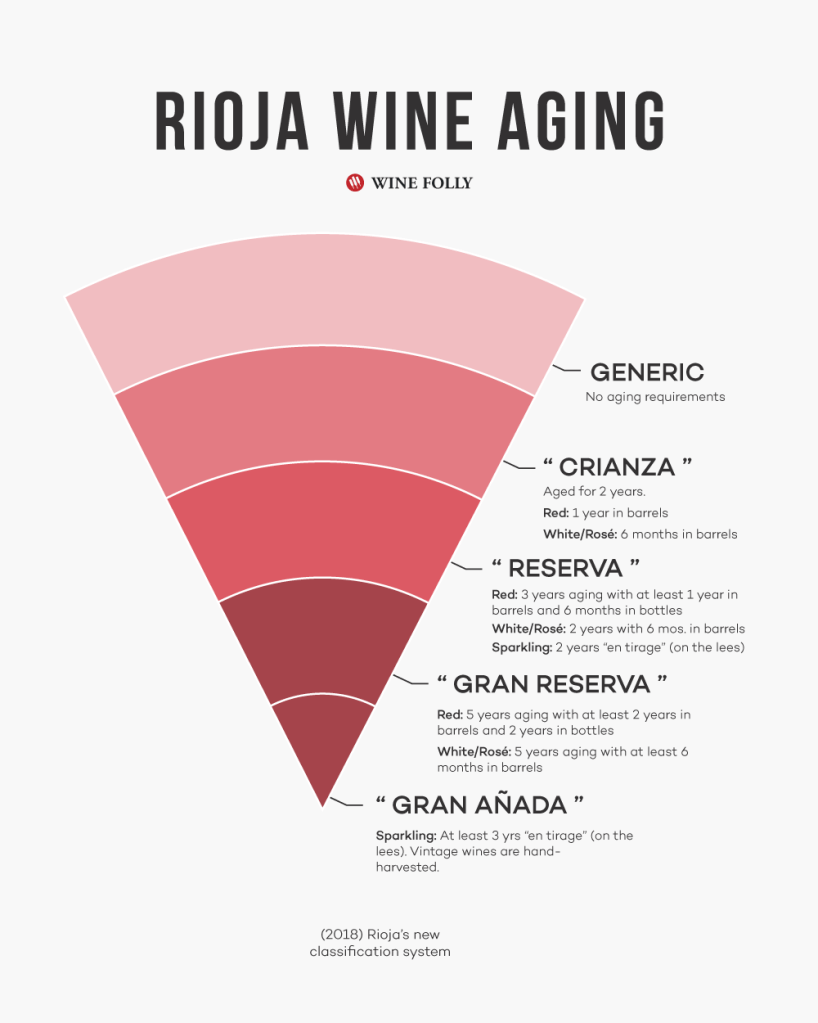
- Terms to know – Crianza, Reserva, Gran Reserva. Read more here
More Information
- Region Introduction
- Where is it? – Rioja is in Northeastern Spain, 2 hours south of San Sebastian or Bilbao, centered around the town of Logrono.
- What’s it known for? – Big, bold, age worthy reds – Tempranillo is king and queen, you’ll see some Grenache (called Garnacha in Spain!), and indigenous varietals such as Maturana tinta. For white’s you’ll see mostly blends of Viura, Garnacha Blanca, and Malvasia
- Important history – Rioja’s use of American oak barrels originated with Spain’s discovery of the New World. As demand for American oak grew (helped by the fact that it was a lot less expensive than French oak), so too did the Rioja winemakers love of the flavors it imparted into their wine. American oak imparts more vanilla notes, toasted coconut, and a slight savory note (think dill, tarragon, etc)
- Terms to know – Joven, Crianza, Reserva, Gran Reserva*
- Joven is young wine – buy now, drink now – usually a lot more fruit forward
- Crianza – aged 2 years; at least 1 in barrel
- Reserva – aged 3 years; at least 1 in barrel and 6m in bottle
- Gran Reserva – aged 5 years; at least 2 in barrel and 2 in bottle
*different aging requirements for whites/roses
- Logistics
- When to go – not summer 🙂 – I went in October, and the weather was perfect. Avoid July and August as the temperatures regularly get into the high 90s low 100s.
- Getting there – flying to Bilbao via Madrid was the most direct and cheapest option for me, but I’m not going to pretend to be a points/flights expert. There are people out there who know way more than I do. Listen to them.
- How I got around – One of my best friends and I drove around in a cute little Skoda, and only got one speeding ticket.
- Other ways to get around – there are trains, and you can (and should!) take them between cities. But in Rioja, it’s best to get a car (or a bike, if you dare)
- Wineries (3-4 per region)
- Producers I visited – highlights and lowlights
- Akutain – 8.5/10
- through a connection I met the owner and wine maker of Akutain who took us around his cellar and vineyards, and sold us the last (and unlabeled) bottle of 2004 gran reserva.
- communication, vibes, wine
- good for potentially buying older vintages
- need reservation/contact ahead of time
- no food
- Bodega Javier San Pedro Ortega 7.5/10
- Gorgeous estate, can sit eat cheese drink wine etc
- has outdoor space
- good for younger wines + wines that can age
- more polished, speak english, some wines were top notch, others were a little flat
- didn’t need a reservation (but it always helps)
- Eguren Ugarte 8/10
- had food (didn’t eat there, so can’t speak to quality)
- good for younger + unique wines (not just Tempranillo)
- didn’t need a reservation (but would encourage especially in busier months)
- vibes were impeccable
- Muga 7/10
- good for intro to Rioja, wide range
- Available in the US, but offered a few back vintages or rare bottles (at a premium from regular tasting)
- Lopez de Heredia 7.5/10
- classic big name estate – rich history
- good for intro to rioja
- need reservation for full tour/tasting but can walk in for a glass (or half bottle) of wine + for buying
- have small snacks + outdoor space
- This is it – the wine you think of when you think of Rioja. The family has been doing this for a VERY long time
- Akutain – 8.5/10
- Other producers of note
- Remelluri – need reservation, good for whites
- Marques de Riscal – go for the Gehry architecture alone, but you need a reservation. They have a Michelin starred restaurant on site at the hotel
- Cost of tastings – most tastings were free, and if they weren’t, buying a bottle waived the tasting fee
- Producers I visited – highlights and lowlights
- If you get tired of wine tasting..
- Other things to do
- In Bilbao, the art musuem!
- In Logroño, walking around to see shops, little medieval villages, etc.
- Resources I used for planning – Wine Bible, Jancis Robinson, Eric Asimov
- Other things to do
The experience
I absolutely adore Spanish wines. Aside from being an absurdly good value (thanks for the subsidies, Spanish government!) There is so much versatility in the wines. I had the distinct pleasure of going to Basque country with a friend back in 2021 – we flew into Bilbao through Madrid (after a 6 hour delay turned cancelled flight and a night at a JFK airport), ate our way through San Sebastian and then spent a few days in Rioja, tasting some of the most incredible wines along the way.
The most striking thing about the Basque region of Spain is how much it feels different from the rest of Spain – it’s decidedly NOT Madrid or Barcelona, would be offensive to both parties to compare them to Andalucía and Seville, but has a warmth that exudes from every corner of life. Part of the reason for this is, well, it was autonomous from Spain for a long time. Nestled between the mountains and the sea, in the foothills of the Pyrenees, you can eat, drink, soak up art and history, sit by the beach, and experience the pride of the Basque people (many don’t refer to themselves as Spanish, they still see themselves as Basque first, Spanish second.
Maybe it’s the striking coast line, maybe it’s the rugged terrain of the vineyards, but there was a sense of gratitude and pride among everyone I spoke to. Gratitude towards the land (even in off years, even as climate change presents new challenges) and pride in what they produce. Basque cider is something everyone should try once – it’s nothing like angry orchard (no offense to angry orchard).
However, as incredible as Basque country is, this is actually about a region two hours south, whose vineyards follow the Ebro river and border 3 Spanish provinces – we’re talking Rioja.
The people, the towns, the food, and the wines of Rioja were all exactly what you’d expect – rustic,
 Fine, Wine
Leave a comment